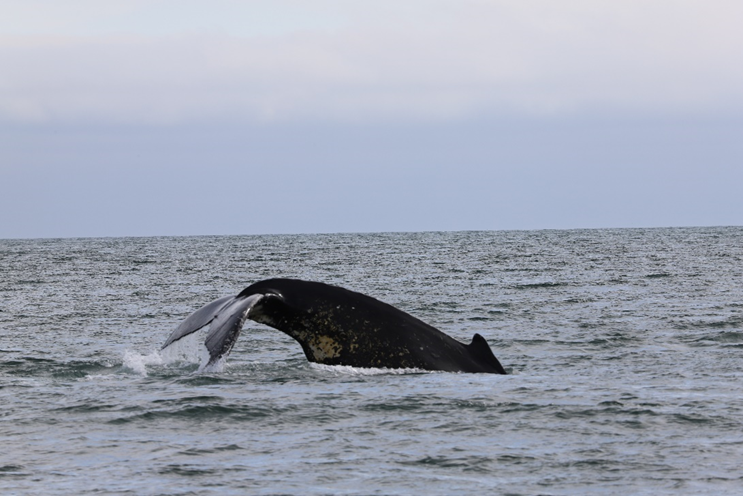
Although subantarctic seabirds breed in remote areas, they are still exposed to pollution caused by human activities. This study assessed the presence of microplastics and several endocrine-disrupting chemicals in seven seabird species collected on the subantarctic island of South Georgia (Figure 1).
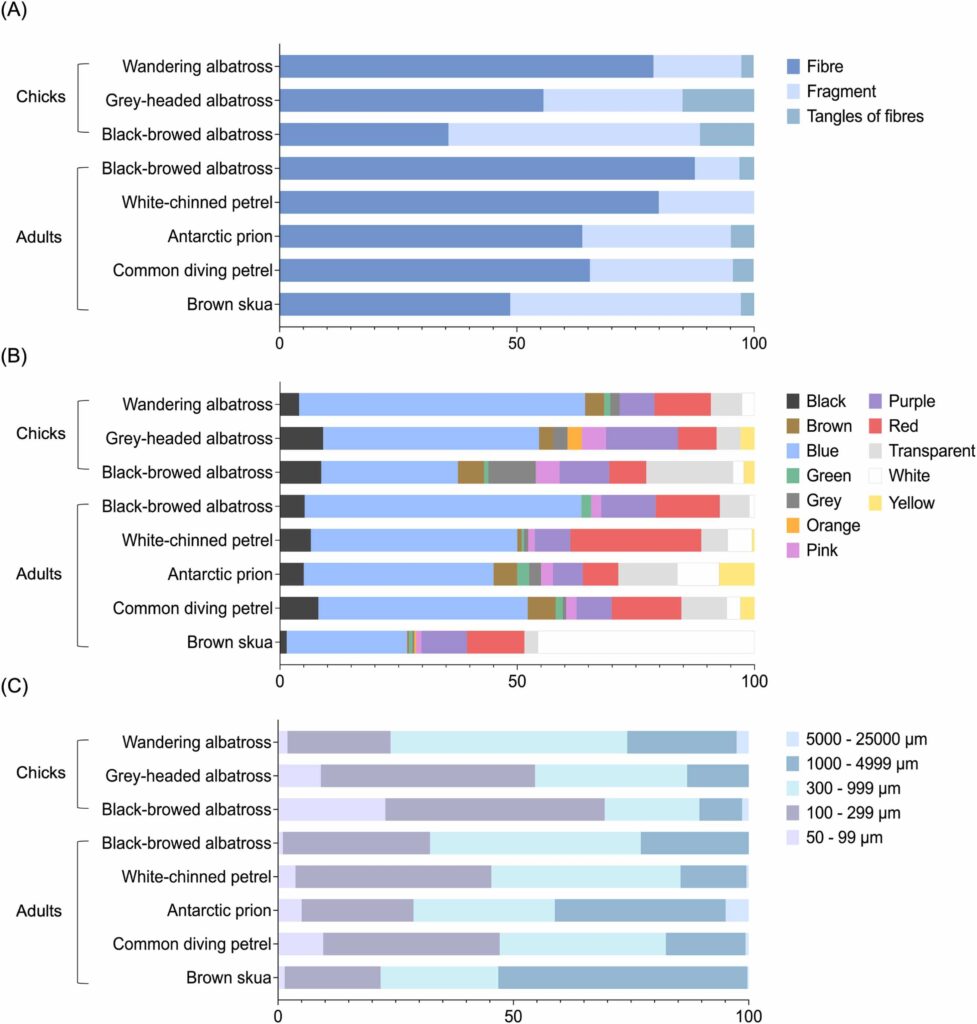 Figure 1: Frequency of occurrence of the types, colours and sizes of anthropogenic particles found in adults and chicks of seven seabird species from South Georgia.
The results showed that anthropogenic particles were present in almost all individuals analysed. In total, 1275 particles were recovered from the gastrointestinal tracts of 76 birds, with a frequency of occurrence of 97.4%. Among the particles chemically analysed, 59% were synthetic, showing that plastics are present even in ecosystems considered remote.
The study also analysed different groups of endocrine-disrupting chemicals, including brominated flame retardants, UV-filters, synthetic fragrances and bisphenols. However, only PBDEs and MeO-PBDEs were detected at concentrations above the limit of quantification. These compounds were found in both liver and muscle, but the highest concentrations occurred in the liver, which is related to the role of this organ in the metabolism and accumulation of contaminants.
The highest PBDE concentrations were found in adult brown skuas, while the highest MeO-PBDE concentrations were recorded in wandering albatross chicks. Although microplastics can act as vectors of chemical contaminants, the study did not find a significant relationship between the number of ingested particles and the concentrations of brominated flame retardants in tissues.
Overall, this study shows that subantarctic seabirds are simultaneously exposed to anthropogenic particles and plastic-associated chemical contaminants. These results reinforce the importance of seabirds as sentinels of marine pollution and highlight the need to improve monitoring and policies aimed at reducing plastic pollution in the Southern Ocean.
Source: Fragão, J., Manno, C., Phillips, R. A., Cunha, S. C., Fernandes, J. O., Batista de Carvalho, L. A. E., Marques, M. P. M., Xavier, J. C., & Bessa, F. (2026). Co-occurrence of microplastics and endocrine-disrupting chemicals in subantarctic seabirds. Journal of Hazardous Materials, 509, 142018. https://doi.org/10.1016/j.jhazmat.2026.142018
Author: Sara Santos