Skip to content
APECS Portugal - A website for early career scientists and from early career scientists to the World
APECS Portugal
  • APECS Portugal
    • About
    • Executive Committee
    • Partners
  • Activities
    • Workshops
    • Polar Weeks
    • Webinares
    • Science Events
  • Open Science
  • Join Us
    • Contacts
  • Português
  • Toggle website search
Menu Close
  • APECS Portugal
    • About
    • Executive Committee
    • Partners
  • Activities
    • Workshops
    • Polar Weeks
    • Webinares
    • Science Events
  • Open Science
  • Join Us
    • Contacts
  • Português
  • Toggle website search
Read more about the article Trace elements in soils of the Antarctic ice-free areas: Insights on natural geochemical values, anthropogenic impact and possible remobilisation upon permafrost thaw
Antartic / Climate changes / Environmental contaminants

Trace elements in soils of the Antarctic ice-free areas: Insights on natural geochemical values, anthropogenic impact and possible remobilisation upon permafrost thaw

Antarctica’s ice-free areas represent less than 0.5% of the continent’s surface, yet they host nearly all terrestrial biodiversity and most human infrastructure, such as scientific stations and former sites of…

0 Comments
27/02/2026
Read more about the article Ground surface temperature regimes are controlled by the topography and snow cover in the ice-free areas of Maritime Antarctica
Antartic / Climate changes / Ice shelf

Ground surface temperature regimes are controlled by the topography and snow cover in the ice-free areas of Maritime Antarctica

Did you know how the ice-free areas of Antarctica hide a complex world beneath our feet? The ground there doesn’t just sit quietly! It warms, freezes, and thaws in patterns…

0 Comments
31/12/2025
Read more about the article Mercury Concentrations, Habitat and Trophic Position of Antimora rostrata and Macrourus holotrachys from South Georgia (Southern Ocean)
Antartic / Environmental contaminants / Food chain

Mercury Concentrations, Habitat and Trophic Position of Antimora rostrata and Macrourus holotrachys from South Georgia (Southern Ocean)

Mercury (Hg) is considered a neurotoxin capable of severely harming wildlife, including marine ecosystems. It has a high dispersal capacity through atmospheric and oceanic currents, allowing it to reach remote…

0 Comments
28/11/2025
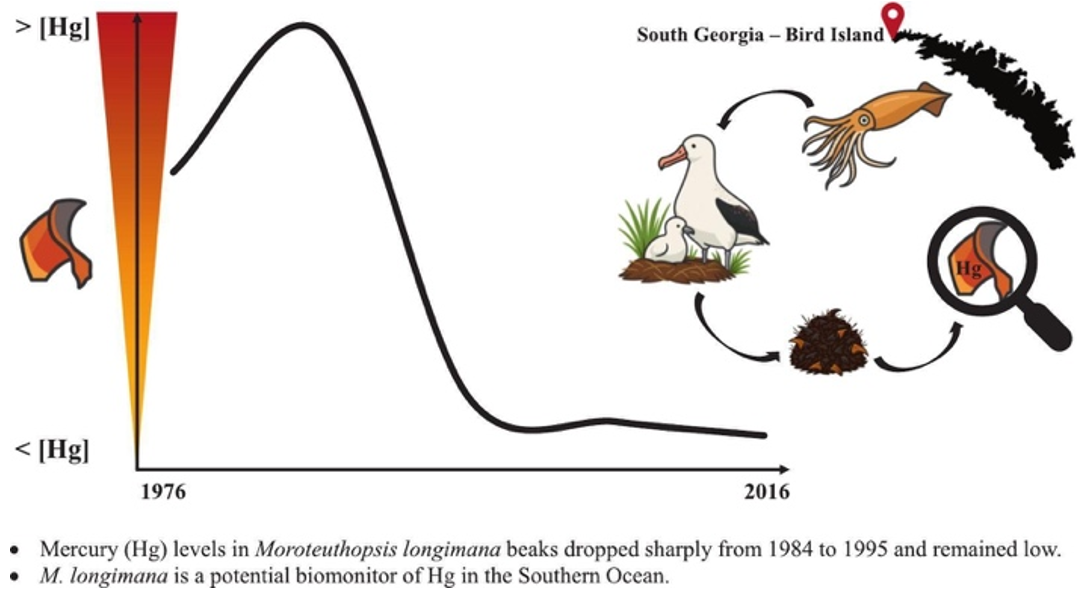
Read more about the article Decreasing mercury concentrations in beaks of the giant warty squid Moroteuthopsis longimana in the Scotia Sea since the 1970s
Antartic / Environmental contaminants / Food chain / Marine species / Oceans

Decreasing mercury concentrations in beaks of the giant warty squid Moroteuthopsis longimana in the Scotia Sea since the 1970s

The giant warty squid (Moroteuthopsis longimana), a deep-sea species from the Scotia Sea in the Southern Ocean, might be a key to assay to track one of the planet’s most…

0 Comments
23/09/2025
Read more about the article Projecting future climate change impacts on the distribution of pelagic squid in the Southern Ocean
Antartic / Climate changes / Marine species / Oceans

Projecting future climate change impacts on the distribution of pelagic squid in the Southern Ocean

This study examines how climate change may alter the distribution of pelagic squid in the Southern Ocean. Using species distribution models (SDMs), the authors projected the future habitat suitability for…

0 Comments
30/06/2025
Read more about the article Full-length 16S rRNA gene sequencing combined with adequate database selection improves the description of Arctic marine prokaryotic communities
Antartic / Bacteria / Biodiversity / Climate changes / Conservation / Marine species

Full-length 16S rRNA gene sequencing combined with adequate database selection improves the description of Arctic marine prokaryotic communities

When we think about the Arctic, images of endless ice and polar bears usually come to mind. However, beneath the surface of the Arctic Ocean lies an incredible world that…

0 Comments
30/05/2025
Read more about the article Deep-sea food-web structure at South Sandwich Islands: net primary production as a main driver for interannual changes
Antartic / Climate changes / Food chain / Oceans

Deep-sea food-web structure at South Sandwich Islands: net primary production as a main driver for interannual changes

This study investigates the deep‐sea food‐web at the South Sandwich Islands in the Southern Ocean, focusing on how net primary production drives interannual changes in food chain length and overall…

0 Comments
29/04/2025
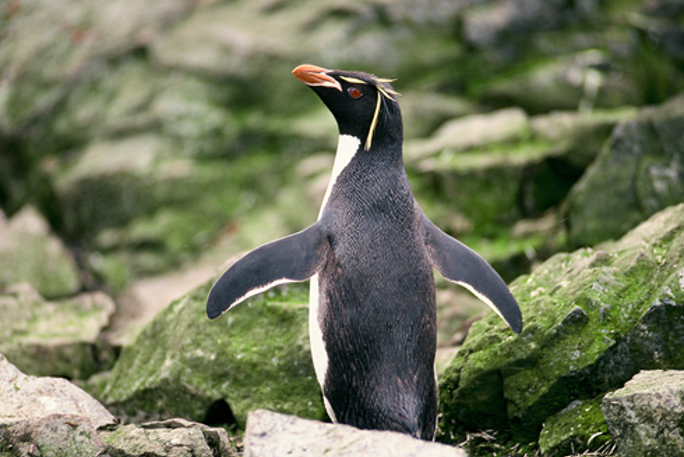
Read more about the article Evidence of eastern rockhopper penguin feeding on a key commercial arrow squid species
Antartic / Climate changes / Conservation / Food chain

Evidence of eastern rockhopper penguin feeding on a key commercial arrow squid species

Cephalopods (squid and octopods) play an essential role in the Southern Ocean’s ecosystem, acting as a link between lower trophic levels and top predators. However, their ecological role in the…

0 Comments
24/02/2025
Read more about the article The Squid Beaks Theory: Unravelling the mystery of mercury concentrations in the muscle of Morotheutopsis longimana
Antartic / Environmental contaminants / Food chain

The Squid Beaks Theory: Unravelling the mystery of mercury concentrations in the muscle of Morotheutopsis longimana

Mercury (Hg) is a toxic metal, which as seen its concentrations increase in the environment due to anthropogenic activities. It bioaccumulates in organisms throughout life and biomagnifies in food webs,…

0 Comments
31/12/2024
Read more about the article Mercury Biomagnification Antarctic Food Web
Antartic / Climate changes / Environmental contaminants / Food chain

Mercury Biomagnification Antarctic Food Web

The article examines how climate change and warming Southern Ocean waters can increase the availability of mercury (Hg) in the Antarctic marine food web, due to the release of ice-stored…

0 Comments
27/10/2024
  • 1
  • 2
  • 3
  • 4
  • …
  • 7
  • Go to the next page

O que é o Ciência às Claras?
O Ciência às Claras é a nossa rubrica mais antiga! Esta é publicada mensalmente e consiste na adaptação e resumo de um artigo científico atual, para uma forma mais simples e de fácil compreensão por todos os interessados em ciência e público geral, tornando assim a ciência acessível a todos.

What is Open Science?
Open Science, is our oldest rubric! It is monthly published and consists in the adaptation and short version of a recent scientific paper, to a simpler and easier way to understand by all interested in science and public in general, making science accessible for everyone.

April 2026
M T W T F S S
 12345
6789101112
13141516171819
20212223242526
27282930  
« Feb    

  • Português
  • English

| Contactos | Política de Privacidade |

| Contacts | Privacy Policy |

  • Facebook
  • Instagram
  • LinkedIn
  • Twitter
  • YouTube

Copyright by APECS Portugal 2026 | Feito por Diana João